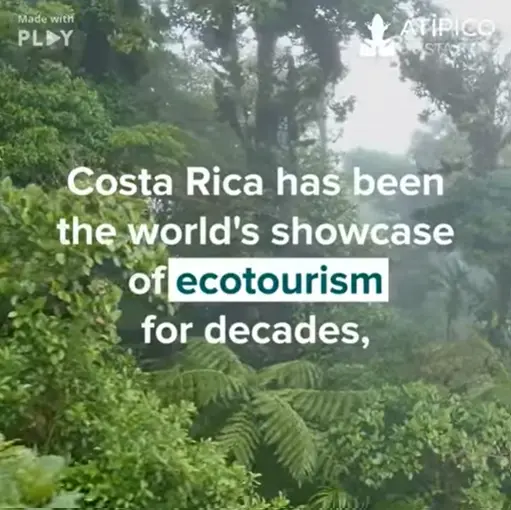
Sustainable tourism in Costa Rica: an ecological model unique in the world
Updated: Nov 1, 2025
A Pioneer Commitment to Responsible Tourism
Costa Rica is recognized worldwide as a pioneer in sustainable tourism. As early as the 1990s, the Costa Rican government developed a national strategic plan to promote a form of tourism that is both environmentally responsible and beneficial to local communities.
This strong commitment is guided by a long-term vision: protecting ecosystems while enhancing local territories through a green economy and sustainable community initiatives.
National Parks Serving Conservation and Travel
The creation of national parks and nature reserves quickly became an exemplary model of coexistence between nature and tourism. Today, Costa Rica is home to 152 protected areas, including three UNESCO World Heritage Sites.
These areas represent nearly 25% of the national territory and shelter around 5% of the planet’s biodiversity — an extraordinary record for such a small country!
Thanks to this ambitious conservation policy, the nation has successfully preserved ecosystems as diverse as tropical rainforests, active volcanoes, wild beaches, and coastal mangroves.

The CST Label: A Guarantee of Sustainable Tourism in Costa Rica
In 1997, the Costa Rican Tourism Institute (ICT) launched the Sustainable Tourism Certification (CST), a national eco-label that recognizes hotels, agencies, and businesses committed to environmental protection, social responsibility, and the sustainable management of natural resources.
A true international model, sustainable tourism in Costa Rica continues to pave the way toward a future where travel goes hand in hand with responsibility and regeneration.